Vía de la Plata: Stage 11
The Silver Route
On foot
38stages








Information
About this stage
You can divide this stage into two if is too long for you, you can stay the night in Aldea del Cano or even in Valdesalor. There are approximately 40 kilometres between Alcuéscar and Cáceres but you have to take into account that the stage is easy and you won’t have to walk up. You can walk the entire stage and spend one day in Cáceres to visit the city and also to rest.
Recommendation Pilgrim
This stage could be a little bit long but there is the only problem. We recommend pilgrims to divide this stage into two to visit Cáceres or stay two nights there to visit all the city.
Distance and elevation
Stage profile

Route
Itinerary
Km 0 – Inicio
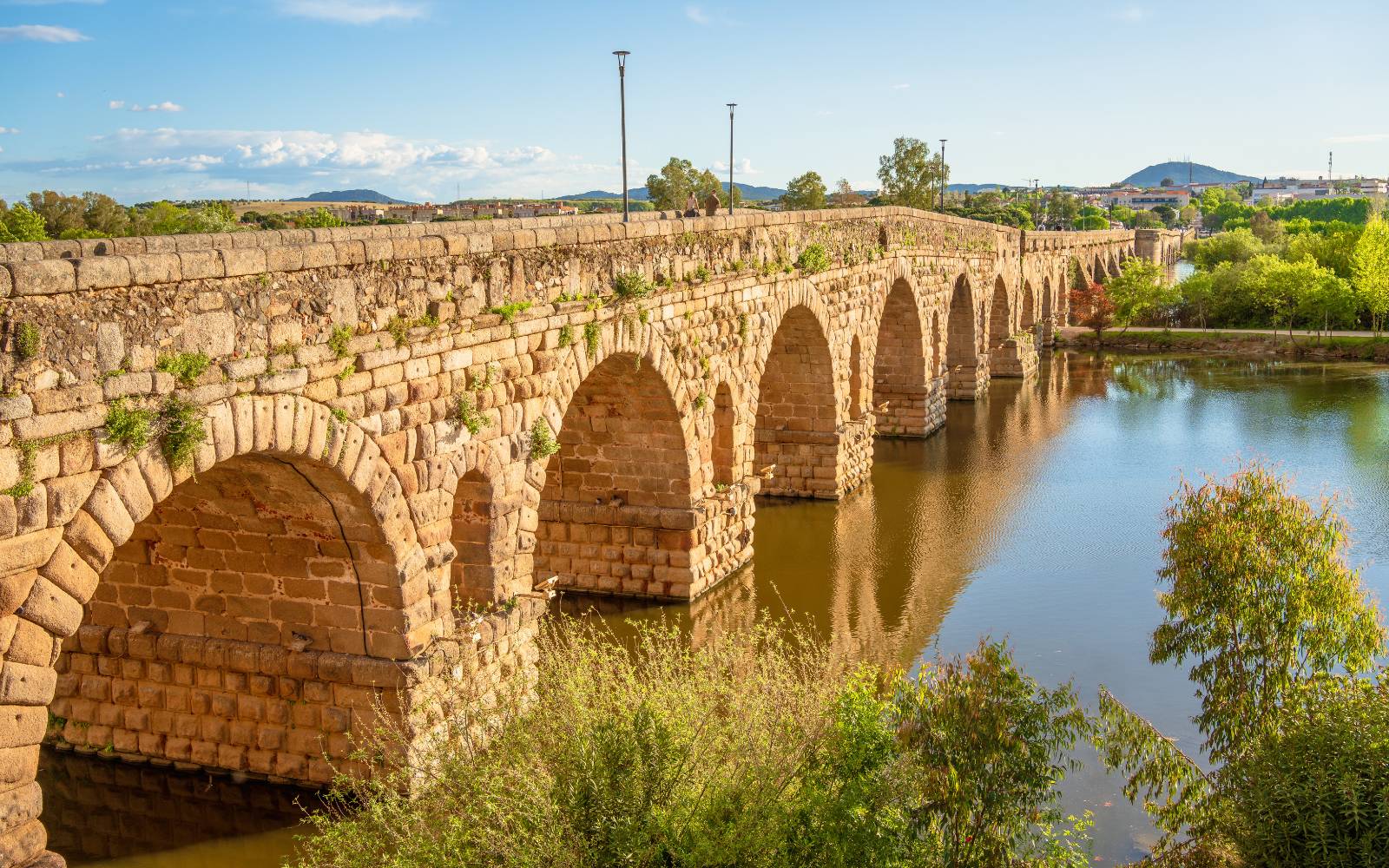
While leaving Alcuéscar you will see a sports centre, after crossing it you will have to walk approximately one kilometer after get to a path to the left that will lead you to the Regato del Aceite stream. After crossing the stream you will walk through some fields near the national road. You will be walking near the Embalse de Ayuela reservoir. To get to Casas de Don Antonio you will have to cross the river. In this village you will find some services. This village was built such as the other ones near it, thanks to the influence of the Roman Empire. You will find two hostels that used to be in the past houses to host pilgrims. You will continue crossing a hermitage towards Aldea del Cano through a path parallel to the national road. You will find again a stream, you will have to cross it through a roman bridge and crossing then Aldea del Cano. The route won’t go through the centre of the village but if you need something you can get to its centre to get it or also to visit it. Near the village you will find a castle called Castillo de Mayoralgo, one of the oldest fortification in all the province that was declared Heritage of Cultural Interest. Once you leave this village you will have to cross the road that leads to the train station and a little bit after you will have to cross the dual carriageway through an underpass. You will get to another stream called Molinillo; you will be able to cross it. Then you will have to walk up to get to the Aeródromo de la Cervera aerodrome. Then you will have to walk approximately 4 kilometres to get to the Salor river and also to cross its bridge called La Mocha to get to Valdesalor. You can stay the night in this village and get to Cáceres in the next stage, you will find a hostel here. If you decide to continue you will have to walk approximately 20 kilometres more to get to Cáceres. You will have to leave Valdesalor through the national road until get to a petrol station. Once you get there you will have to go through a path to the right until get to a bridge that crosses the dual carriageway. Then you will walk through an asphalted path leaving the national road, you will have to cross through a tunnel to avoid the N-630. The next goal will be walk up to Puerto de las Camellas, near the military area called Santa Ana. A little bit after you will find again the national road and you will have to cross it to get to get to Cáceres. You will walk through some streets such as Oceano Atlántico, Ronda de San Francisco and also through the square with the same name to get to the old city. You can continue now to Casar de Cáceres, located eleven kilometres from the city centre or stop now to visit the city. Once you get to the Plaza Mayor square you will get to the streets called Gabriel and Galán and then to a square called Duque. Once you get there you will have to turn left and go to the bullfighting arena and then you will have to cross the national road until get to a roundabout. Now you will have to walk up for two kilometres and then you will have to go to the left to get to a path that will lead you to Casar. Then you will have to walk through the pedestrian promenade until get to a street called Larga Alta, near the local hostel, where you will find some services. You can’t leave Cáceres without visiting its old city that is World Heritage. If you want to admire the Muslim legacy in this area, you just need to see Veletas house, which has a reservoir and a complete and permanent exposition.
Local Information
Police, Medical Care, What to See, Where to Eat…
Km 37.4 ‧ Cáceres
Local Information
Police, Medical Care, What to See, Where to Eat…


